
Investing Education · Investing mindset
Investor vs trader: how time horizon changes the way you make money
People argue "investor vs trader" like it's about smarts or strategy. Flow's answer in this conversation: the real dividing line is time horizon — and it changes everything about what you focus on.
Time horizon isn't a label you pick — it's the operating system that decides everything downstream. Once Flow knows he's an investor on a given position, the horizon tells him what to research (the business, not the candles), when to act (only once the data backs a thesis), what to do when the market gets ugly (sit in cash and wait), and which positions to leave completely alone (the long-term holds he never touches). A day trader runs the opposite system on the opposite clock. Pick the horizon first and the behavior follows; get the order backwards and you end up managing a long-term buy like a panicked day trade.
Your time horizon decides everything downstream
In this sit-down with Woods from the No-FOMO podcast, Flow calls himself "an investor first," and when Woods asks what separates an investor's mindset from a trader's, the answer is one word: time horizon. But the point isn't the word — it's what the word controls.
Flow's rule of thumb: investing is at least a five-to-ten-year game, while day trading is in-and-out, maybe a couple of days. That one choice sets the rest. On a multi-year horizon, the business matters and the candles barely do; you dive into the company and accept that good businesses can move slowly. On an intraday horizon, the chart and the session's sentiment are what you have to work with. Same market, two completely different jobs — so the horizon has to come before the position, not after.
Three buckets, three sets of rules
Flow doesn't run one strategy — he runs separate buckets, each with its own rulebook, and that's clearest in how he behaves when the market turns uncertain. (This is his personal practice, not advice.)
- Long-term holds: he doesn't touch them, "no matter what" — he describes holding them with the intention of passing much of it to his children. Uncertainty doesn't change these.
- Swings / what he loosely calls "leaps": in uncertainty he'll take some profit off these.
- Day trades: he pauses them during uncertainty rather than forcing setups.
His own posture when things get murky: cash on the sideline, being patient. Notice the horizon doing the work again — the same market event produces three different responses because each bucket has a different clock.
One clarification, since he uses the term loosely: LEAPS are options that expire more than a year out — a contract type, not a holding-period style. Flow uses "leaps" as a bucket; the precise meaning is the long-dated contract.
No thesis, no trade
On the investing side, the horizon raises the bar for acting. Flow won't enter a long-term position without a data-supported thesis for why — and he won't buy a stock other people pitch him until he has researched it himself. He describes a steady stream of people bringing him names; he still doesn't buy until he's done his own work.
That's the same idea as his bigger line from this interview: "the people taking your money aren't smarter than you — they just had the information before you did. The edge was never the indicator. It was in the data." Trained money acts on information and a defined horizon; it doesn't stare at a chart and hope.
Patience is both an entry and an exit
Patience shows up on both ends of a position, in every style. You wait for a good entry instead of chasing — and, just as important, you don't panic-exit a position that hasn't actually invalidated. The horizon is what tells you which is which: a long-term hold wobbling on a bad week hasn't broken your thesis, so reacting to it like an intraday stop-out is the mistake, not the discipline.
A short-dated options lesson from a trade that went wrong
Flow tells a story against himself about a Tesla options trade that lost money. The specific numbers are his loose, off-the-cuff recollection — he literally says "let's just make up a price" — and they don't reconcile cleanly, so treat the dollar figures as illustrative, not exact. What's worth keeping is the mechanics, which are evergreen:
- He bought call options with a strike far above the share price on a roughly two-week expiration. A strike that far out of the money, that close to expiry, carries very little delta — it barely moves when the stock moves — and usually expires worthless.
- The fix: for short-dated options (a week or two out), the strike needs to sit near, at, or in the money, and your price target can't be wildly optimistic. The expiration has to match the move you're actually expecting.
- And know what a position costs: premium × 100 × number of contracts. (Being in the money is about where the strike sits relative to price — it is not the same thing as being profitable.)
Get your own money right before the market's
Flow's starting point is unglamorous: get your personal finances in order first — budget, pay your bills, keep your credit right, don't take on too much debt or over-leverage. The habits that keep your own money disciplined are the same habits that keep you disciplined in the market. As he puts it, he'd rather value information over indicators and have his data before the crowd does — but that only works once the foundation underneath it is steady.
This is educational content, not financial advice. Any figures are illustrations, not promises. Investing involves risk, including loss of principal. Do your own research and consider a licensed professional.
The receipts
Sources and context behind the facts on this page. Flow's analysis is his own; sourced facts are labeled where the distinction matters.
- Interview with Woods, No-FOMO podcast (Flow the Investor, full transcript)
- Options mechanics referenced (strike moneyness, delta on short-dated contracts, premium × 100 × contracts, LEAPS = >1yr expiry) are standard, independently verifiable finance concepts, not claims from the interview
Common questions
Is investing or day trading better?
What time horizons does Flow use?
What does Flow do when the market gets uncertain?
Do you need fundamentals to day trade?
What are LEAPS?
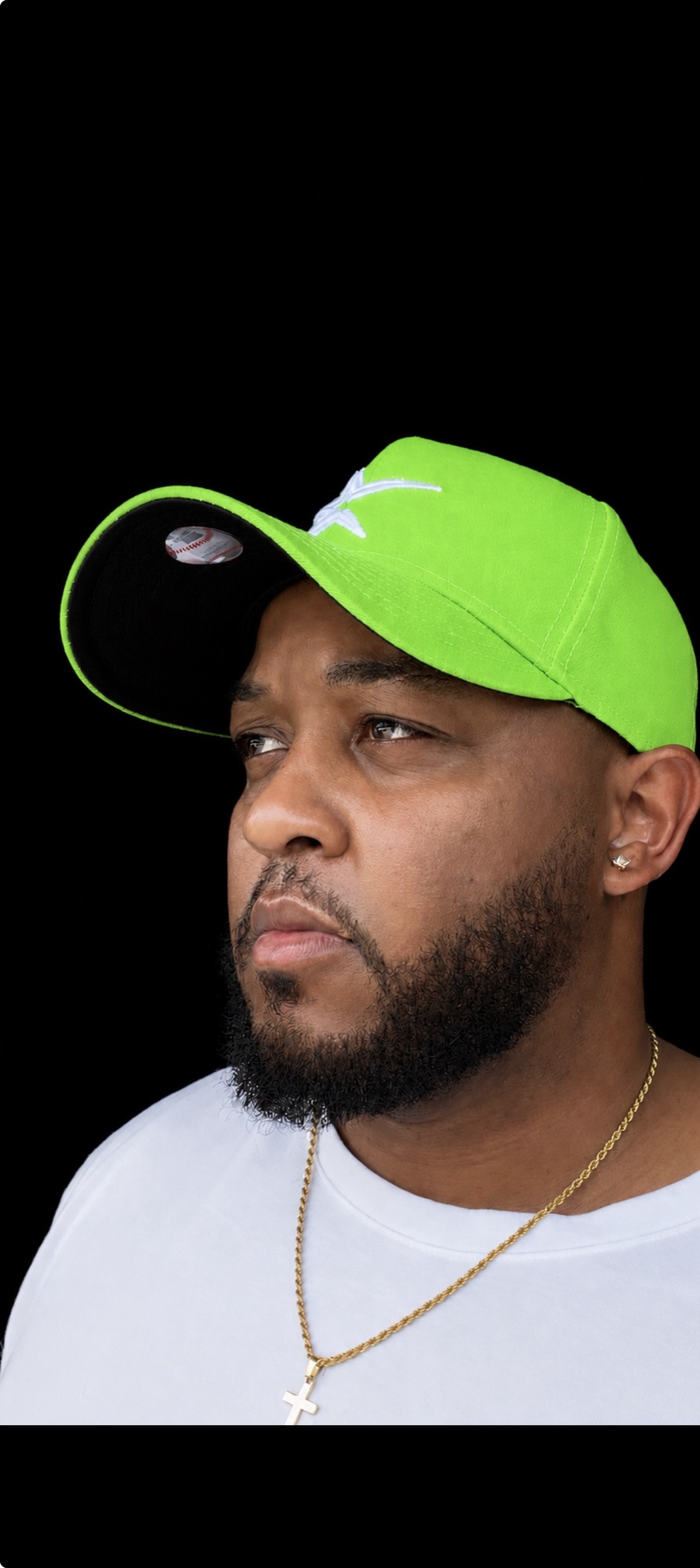
Flow the Investor is the creator of Heavy Returns, a financial-media brand teaching everyday people to invest and trade with discipline — what he calls Trained Money. He presents every video on the official @HeavyReturns channel.
Pick your lane on purpose.
START: Your First 5 Moves helps you set up the investor path the right way — free, no card.
© 2026 Heavy Returns. Educational content only. Not financial advice. Video by Flow the Investor on the official @HeavyReturns YouTube channel; this page is a written companion.